

FEAR NARROWS OUR VIEW
curiosity opens it
When we make assumptions and judgments instead of asking questions, it can lead to stereotyping, rejection, hostility, us-versus-them thinking, and other behavior that further separates us from each other.
We fear what we don’t understand when we fail to see beyond ourselves and our immediate frame of reference. Sometimes we condemn people simply because their beliefs, cultures, identities, choices, or ways of living are unfamiliar to us, even when those differences pose no actual threat to our lives.
Fear itself isn’t the problem. It’s a necessary emotion that triggers our survival response; it protects us and helps keep us alive. The problem comes when we mistake unfamiliarity for danger.
Something is different from what I know.
It feels uncertain.
Uncertainty makes me uncomfortable.
My brain wants an explanation.
Instead of getting curious, I reach for a judgment.
They’re wrong.
They’re weird.
They’re dangerous.
People like that are ruining everything.
Where fear and judgment create distance, curiosity creates the possibility of connection. Sometimes understanding tells us that separation is, in fact, appropriate. And if that’s the case, at least we made an informed choice rather than one driven by fear of the unknown.
Curiosity requires us to accept the possibility that our current understanding may be incomplete.
Wait. What don’t I understand?
Someone avoiding an important conversation can ask, What am I actually afraid of?
Someone encountering a culture they don’t understand can ask, What might this culture teach me about another way of seeing the world?
Someone angry about another person’s way of living can ask, Does this actually threaten me, or does it just make me uncomfortable because it’s unfamiliar?
Someone convinced they’re right can ask, What information would change my mind?
We won’t always understand everything, and that’s okay. But when we make an effort to understand before we judge, we create more room for compassion, thoughtful disagreement, and genuine connection. We have the chance to see beyond our own experience and consider other perspectives. We don’t have to abandon our values or agree with everyone. Sometimes asking one more question is enough to change the way we see someone, and it can help us make more thoughtful, informed choices about ourselves, each other, and the world around us.
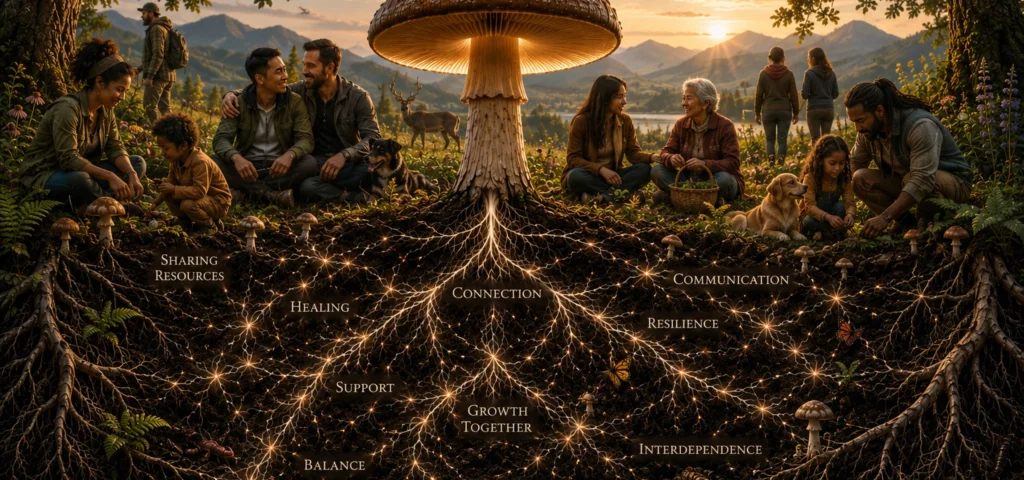
We don’t exist outside the ecosystem making choices about whether nature deserves to survive.
We’re inside it.
And maybe remembering that is another way of broadening our perspective.
Then there’s awe.
Stand beneath an enormous old tree. Look across an ocean that disappears into the horizon. Watch a thunderstorm roll in, sit beside a fire, or stare at a night sky far enough from a city that you can actually see it. There’s a reason experiences like these seem to stop us in our tracks.
Psychologists have found that awe can temporarily reduce our focus on ourselves and increase our sense of connection to something larger. Some experiments have even associated awe with more helpful and cooperative behavior.
Nature has a way of reminding us that we’re small without making us insignificant.
And maybe that’s something worth paying attention to in a world where it’s easy to become consumed by our own little corner of it.
What Are We Losing?
Children may give us one of the clearest examples of what can disappear when nature disappears from everyday life.
Research has linked greener childhood environments with benefits in areas including attention, working memory, physical activity, and well-being. That doesn’t mean nature prevents or treats ADHD, and technology isn’t inherently harmful. But it does raise an interesting question.
When hours spent exploring, moving, playing, socializing, getting bored, getting dirty, and figuring things out are replaced by hours of screen use, what else are we replacing along with the outdoors?
Maybe the question isn’t whether children have too much technology. Maybe it’s whether they still have enough of everything else.
The same question applies to adults and entire communities.
When natural spaces disappear, we don’t just lose somewhere pretty to walk. We can lose places to gather, exercise, play, cool down, experience quiet, encounter other living things, experience beauty and wonder, and briefly step outside environments constantly demanding our attention.
And sometimes we don’t realize what we’ve lost because we’ve gradually become accustomed to living without it.
We build communities around cars instead of people. We replace trees with pavement and then build structures to give us shade. We tolerate noise, traffic, artificial light, polluted air, and endless development as though these are simply the inevitable price of modern life.
Maybe some of them are.
But curiosity asks us to question the things we’ve learned to accept as inevitable.
Does progress always have to mean building more?
What are we gaining, and what are we giving up to get it?
What Is Nature Worth?
There’s another question I think is worth asking.
If nature did none of these wonderful things for humans, would it still deserve our respect?
We’re remarkably good at assigning value to the natural world according to what humans can get from it. A forest becomes valuable timber or valuable real estate. An animal becomes important because it pollenates our crops, controls pests, attracts tourists, provides food, or performs some other useful function. Even some of our strongest arguments for conservation eventually come back to what nature does for us.
Those are legitimate reasons to protect it.
But are they the only ones?
Does another species have value only when it’s useful to us?
Do we value a forest only when somebody can monetize it?
And on a much smaller, more personal scale: What do you do with your trash when nobody sees you?
There’s no reward for carrying an empty bottle until you find a trash can. Nobody congratulates you for leaving a trail or beach exactly as you found it. The forest doesn’t know your name, and the animal whose habitat you respected will never know you did it.
You do it because you recognize that your responsibility doesn’t disappear when nobody is watching.
How we treat the natural world when there is no reward, recognition, or immediate consequence says something about our character.
there Are Other Ways to See Our Place Here
The idea that humans stand apart from nature isn’t the only way people have understood our relationship with the world around us.
Across cultures and throughout history, people have developed very different ideas about land, animals, ownership, stewardship, reciprocity, community, and our responsibilities to the living world. Indigenous cultures aren’t a single group with one worldview, and it would be simplistic to romanticize any culture as living in perfect harmony with nature. Human relationships with the environment have always been complicated.
But different ways of seeing the world can challenge assumptions we didn’t realize we were making.
What might we learn from cultures that understand land through responsibility or relationship rather than ownership alone? What changes when animals, rivers, forests, or mountains are understood as members of a living community rather than resources waiting to be used? What have industrialized societies gained through development and technology, and what might we have lost along the way?
We don’t have to adopt another culture’s worldview to become curious about it.
We can simply ask:
What might they see that we don’t?
Maybe broadening our perspectives means questioning the assumption that humans are the center of everything.
We are one species among millions, dependent on systems far older and more complex than anything we’ve created. Our bodies interact with those systems whether we think about them or not. The air, water, soil, microbes, plants, animals, and climate around us aren’t scenery surrounding the human story.
They’re part of our story.
Protecting the natural world certainly benefits us. The science gives us plenty of reasons to believe that.
But their value was never ours to determine in the first place.
https://unsplash.com/@bhautik_patel3
https://unsplash.com/@manan_chhabhaya
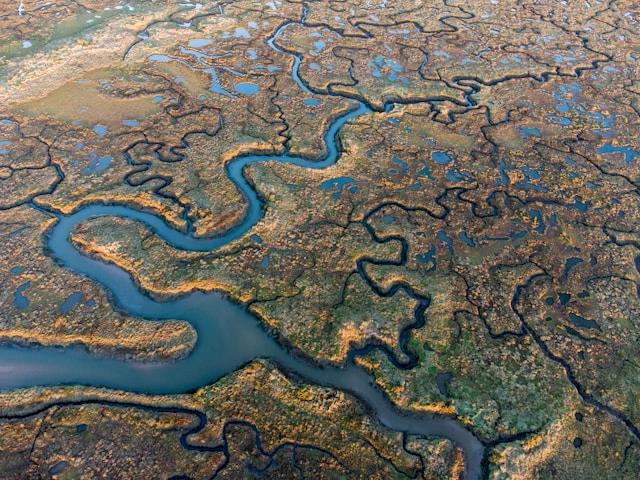
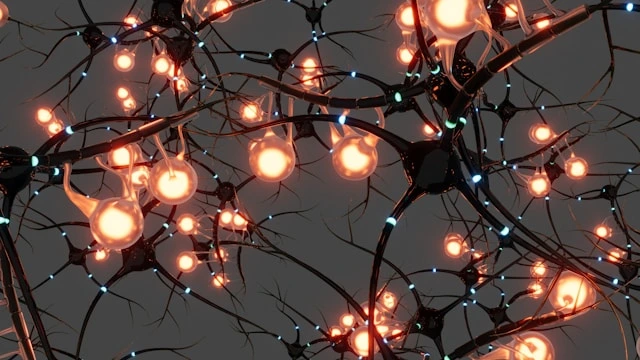
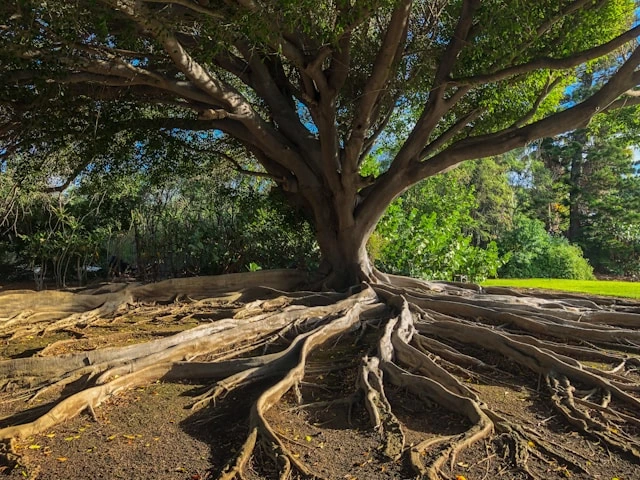
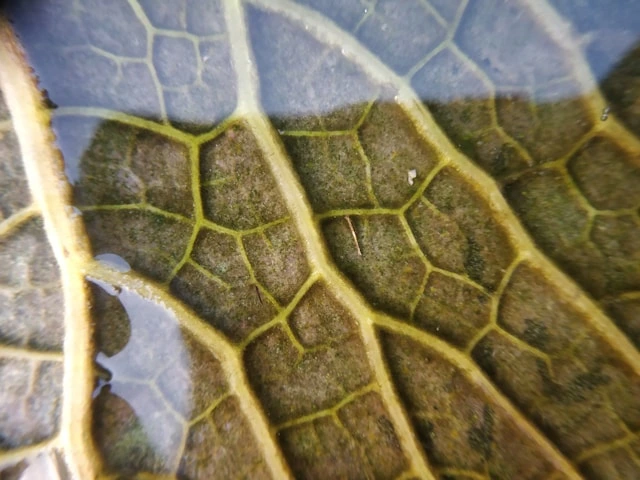
Look closely enough and patterns begin to repeat. Neurons branch. Trees form networks. Veins spread through leaves. Rivers divide and reconnect across landscapes. They aren’t the same systems, but nature repeatedly finds ways to connect, exchange, and move resources through networks. We are part of that story, too.
We aren’t separate from the natural world. We are one expression of it.
